


Commercial vs Home Treadmills – What’s The Difference?
What’s the difference between commercial treadmills and home treadmills?
What are commercial-grade components?
What does “commercial” even mean?
As a retail product manager for Matrix, I’m the go-to source for treadmill questions when my friends are shopping for treadmills. If they have these questions, I know that customers like you do, too! Let me start by explaining the difference between “commercial” and “home.”
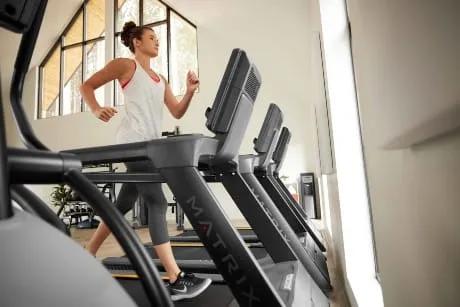
Commercial
Commercial-grade fitness equipment is designed and tested for use in health clubs, gyms, resorts and athletic team facilities where equipment is used for 12 or more hours per day.
Light commercial-grade fitness is equipment designed and tested for use in hospitals and clinics, corporate fitness centers, municipal facilities like fire stations and apartment buildings, where products see six hours of use per day or less.
Commercial and light commercial equipment is extremely durable to accommodate users of all fitness levels, prolonged use and typically undergo planned preventative maintenance to reduce the risk of failure.
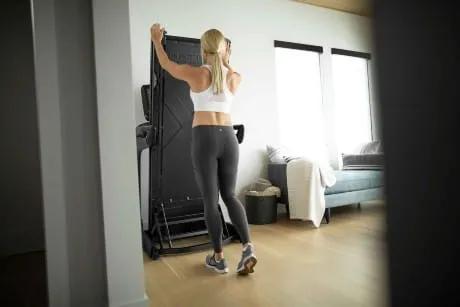
Home
Residential, home-grade or home use fitness equipment is designed and tested for use in single-family homes. They’ll vary largely in price, quality and stability.
Some are designed to endure use by a single user a few times per week and for short periods of time, while others are built to accommodate multiple users and for extended workouts; think marathon training.
Most home products require routine maintenance and are designed to function in homes with standard electrical wiring and outlets.
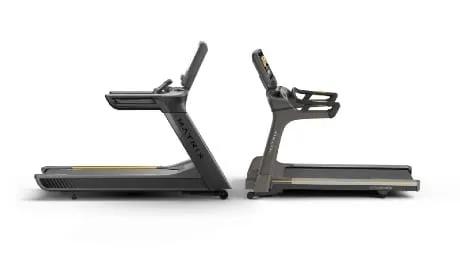
So, what’s the difference between commercial treadmills and home treadmills?
The biggest difference is that commercial treadmills are made to withstand extended use by multiple users per day. To accomplish this, commercial treadmill frames are heavier and larger for strength, stability and to accommodate a higher user weight capacity.
Many commercial treadmills weigh 400 lbs or more, while most high-end residential units are around 300 lbs and low-end treadmills can be 200 lbs or less. Extra frame material and strength means the weight capacity is higher in commercial (400–500 lbs max user weight) compared to high-end home treadmills (350–400 lbs max user weight) and standard home treadmills (less than 300 lbs max user weight).
Since commercial treadmills are placed in dedicated spots within the facility and are in frequent use, they are not designed to fold and easily roll away. Some home treadmills are offered in both folding and non-folding models.
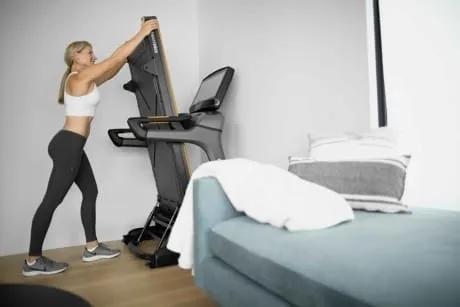
While a commercial treadmill may be overkill for most residential customers, treadmills designed for homes with commercial-quality components are the best fit for those looking for a similar experience to what they’re used to at the gym.
What’s the difference between commercial-grade and standard home use components?
Most commercial treadmills use AC motors because they operate at a lower RPM, so they don’t get as hot and over longer periods of use, they are more efficient and provide more torque. DC motors are the most common motor found in home use treadmills but vary in size and efficiency. For those households with multiple users or avid runners, a home treadmill with an AC drive motor should be considered.
Watch the following video to learn more about the AC drive motor found in the T70 Treadmill.
Another difference is in some of the components that make up the treadmill, such as rollers, running belt, cushioning and running deck.
Most home use treadmill running belts require lubrication every 150 miles or three months, while a thick, multi-ply waxed running belt typically found on commercial treadmills might not require relubrication for thousands of miles, if ever. A few high-end home treadmills like the T70 Treadmill include a commercial-grade waxed belt for virtually maintenance-free care. Matrix home treadmills use a high quality, smooth finish on the running decks that provides lower friction and therefore only require relubrication every 300 miles. A few high-end home treadmills like the T70 Treadmill include a commercial-grade waxed belt for virtually maintenance-free care.
The thicker belt lasts longer and feels more comfortable under foot. Thicker multi-ply belts on commercial treadmills are designed to hold up longer than thinner belts found on some home use equipment, which can range from ultra-thin in low-end treadmills to thick commercial-grade belts on high-end home use treadmills. Keep in mind that thicker belts often need more power, requiring the treadmill to be plugged into a dedicated 20-amp outlet, as opposed to the common 15-amp outlet found in most homes (in North America).
The rollers that the running belt rides on in commercial treadmills are larger than standard home use treadmills. Larger rollers make more surface contact with the belt, which puts less stress on both the roller and the belt as it slides along, extending the life of both. Larger rollers also make for a smoother ride. High-end home treadmills usually come with rollers in the 2.5–3 inch range, whereas commercial treadmills often use 3–3.5 inch rollers.
Commercial treadmills utilize a thick running deck and an advanced cushioning system designed to withstand prolonged use. Entry-level home use treadmills will often have 15 mm–18 mm treadmill decks, mid-range are usually 18 mm–20 mm while high-quality home and commercial treadmills will use 25 mm deck.
In general, entry-level to mid-range treadmills cushioning varies from very small and flat to large and tall rubber cylinders. They also vary in hardness, with some treadmills using softer cushions in the impact zone. Matrix commercial and home use treadmills both use six round, ring-shaped cushions, providing great absorption of impact. One advantage of the donut style vs. soft cylindrical cushions is that it won’t suffer from fatigue or break down over time.
This unique and proprietary running deck and advanced cushioning system on Matrix treadmills is called the Ultimate Deck System. Learn more about this exclusive technology in the following video.
Finally, the display or console that users interact with on a commercial treadmill often have specific restrictions built into the software that limit workout duration so that users can’t hog the treadmill in busy facilities. Programming can be customized to the facility and doesn’t save personal information locally.
In 2001, Johnson Health Tech launched the Matrix Fitness brand to bring premium fitness equipment to the commercial marketplace. Today, Matrix offers a complete line of cardio, strength, and group training equipment for health clubs, luxury resorts and collegiate athletic teams, plus club-quality equipment designed for home use.
We have brought our commercial technologies, award-winning designs and even commercial-grade components to our treadmills for the home.
Matrix treadmills designed for the home feature:
- The same cushioning system as our commercial treadmills
- Thick 25 mm commercial-grade deck
- Large 60 mm rollers
- The TF50 and T70 Treadmill models feature a thick, 2.2 mm belt
- Our flagship treadmill, the T70 Treadmill, sports the same AC drive system as our commercial treadmills and a commercial-grade waxed belt and deck system. It also requires 20-amp power like our commercial treadmills.
If you are thinking about investing in a treadmill, there are several considerations you will need to make before deciding whether you should invest in a commercial-grade treadmill, a home use treadmill with commercial-grade components, or a standard entry-level home treadmill.
Factors to consider when shopping for a treadmill:
Usage: Will you be running or walking? Running places more load on the machine than walking, especially at high speeds and inclines. Runners doing sprint intervals often vary their landing left to right a bit more, so a wider belt is recommended. A walker's longer stride, or a tall runner also requires a longer treadmill belt.
Users: How many people plan to use it, how often and for how long? How heavy and how tall are these runners and walkers? A household with two or more active users could put as much use into their treadmill as some light commercial facilities, in which case commercial-grade components would be an important consideration.
Space: How much space do you have available? Would a folding treadmill help organize your room? How tall are your ceilings and how much clearance do you need above the treadmill to accommodate the tallest user in your household? Some commercial treadmills and even some home treadmills have tall step-up heights, which can be a constraint in rooms with lower ceilings. Is sound an issue with the placement of your treadmill to avoid disrupting family members or even neighbors? Then a high-quality drive system, premium components and rock-solid frame construction would be important considerations to minimize treadmill volume in your home. Keep in mind that slat belt treadmills are often much louder than standard belts.
Extras: Consider the options like workout programs, heart rate monitors, touchscreen control displays and other features. How does each person in your household prefer to work out and what motivates them to move? Do they prefer integrated programs they can access at the touch of a button like Sprint 8 or Virtual Active – or do they just hit go and run or walk at one pace? Do they prefer watching a show to make the time pass or following a coach-led workout video found on a training app or YouTube?
Budget: How much do you want to spend? Basic entry-level home treadmills in North America can start as low as $350 – but keep in mind you get what you pay for! I’ve heard many stories of treadmills breaking, decks cracking in half and more with lower price point (and lower quality) treadmills, even in the $1,000 to $2,000 range. High-quality home use treadmills with commercial-grade components like Matrix treadmills can start in the upper $2,000s and range into the mid $6,000s. And commercial-grade machines can range up to $10,000 or more. Prices range by country, so be sure to research pricing in your region.
Conclusion
The right home treadmill can help you reach your fitness goals and allow you to enjoy a run or walk in the convenience of your home, regardless of the weather or time of day. If you’re searching for a new home treadmill, it’s important to do your research first.
Narrow your selections down to the treadmills that best fits your family’s needs. Then go into a specialty fitness store to hop on your top treadmill picks and try them out. Sometimes the features found in a commercial treadmill vs a high-quality treadmill with commercial-grade components vs a standard lower-end treadmill are not obvious until you experience the machine in person to touch, feel and hear the difference.
And remember, when it comes to treadmill quality and durability, you get what you pay for, so be sure to give it a hard test run before you buy. And on the flip side, while you may think a full commercial top-of-the-line treadmill is the best-of-the-best, it may not be the right fit for your home.
About the Author
Anthony Winge, Global Product Manager
Anthony has been in the fitness equipment industry for 17 years. He has worked in many capacities for Johnson Health Tech over the years but has spent the last 13 years developing products for both home use and commercial facilities around the world.

Disclaimer: This blog post is for informational and educational purposes only and does not substitute for professional medical advice. The above information should not be used to diagnose, treat or prevent any disease or medical condition. Seek the advice of your health care provider before making changes to your diet, daily activity, sleep or fitness routine and any questions you may have regarding your health or a medical condition. Matrix Fitness assumes no responsibility for any personal injury or damage sustained by any recommendations, opinions or advice given in this article. Always follow the safety precautions included in the owner's manual of your fitness equipment.


